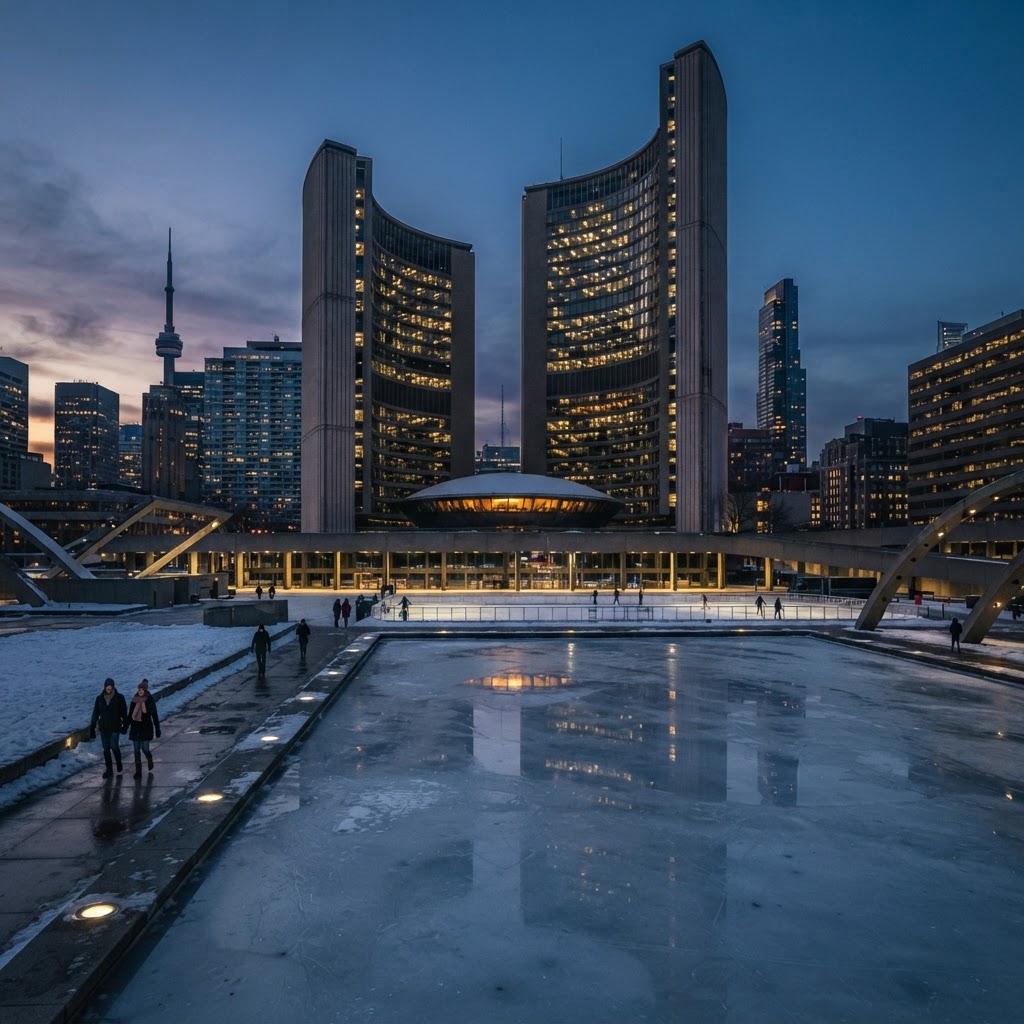
Toronto's 2026 municipal election has been counted, and the city now has a council elected to a four-year term. The ballot counting is finished, the results are available by office and by ward, and attention turns to the quieter work that follows an election: swearing in a new council, appointing committees, and setting the decisions that will define the next four years.
This explainer walks through the sequence of events from a certified result to a working council, the first files the new term will pick up, and the practical ways residents can follow and take part.
The result, in numbers
The 2026 election filled 25 ward council seats, the mayor's chair, and school board trustee positions across four boards. All 1,431 voting places have reported.
- Mayor: Olivia Chow was re-elected with 532,201 votes, or 54.16 per cent, ahead of Brad Bradford with 404,013 votes, or 41.11 per cent. Fifty-three candidates appeared on the mayoral ballot, and 982,660 mayoral votes were cast in total.
- City Council: 190 candidates ran for the 25 ward seats, one councillor per ward.
- School boards: 118 candidates ran for trustee positions with the Toronto District School Board, the Toronto Catholic District School Board, and the two French-language boards.
The full vote counts, ward by ward, are published on our 2026 election results page.
From the count to the swearing-in
A municipal election does not end when the last ballot is counted. Several administrative steps sit between election night and a council that can pass bylaws and spend money.
- Official results are declared by the City Clerk. Election night totals are unofficial until the Clerk formally declares the results after the count is verified. That is the point at which a candidate is legally elected.
- Close results can be reviewed. Ontario's Municipal Elections Act provides for recounts in defined circumstances, including very narrow margins. A recount does not change a result in most races, but it does have to be resolved before a term can formally begin.
- The new council is sworn in. In recent terms, Toronto's newly elected council has held its inaugural meeting in late November or early December, with the mayor sworn in around the same time. The inaugural meeting is largely ceremonial, but it is the legal start of the term.
Until that meeting, the outgoing council continues to exist on paper, and city business carries on through staff under existing budgets and bylaws. There is no gap in city services between an election and a swearing-in.
The first real decisions: committees and appointments
Most of what council does is done in committees before it reaches the council floor, which makes the committee structure the first substantive choice of a new term.
In the term that just ended, council worked through four standing committees: Executive, Planning and Housing, Economic and Community Development, and Infrastructure and Environment, alongside bodies such as the Board of Health and the Audit Committee. Under Toronto's strong-mayor model, the mayor appoints committee chairs and vice-chairs, and council then fills the remaining committee seats and appoints members to agencies, boards and corporations.
Those appointments matter more than they sound. A committee decides which items reach council, how long they are debated, and what amendments are considered. The same report can move quickly or stall for a year depending on the committee it lands in.
The 2027 budget is the first real test
Every new term inherits a set of financial pressures that were decided long before it began: negotiated wage settlements, transit and shelter costs, the state of the capital backlog, and the property tax rate needed to fund all of it.
The first full budget of the term, covering 2027, is typically tabled by the city manager and chief financial officer in January, reviewed by the budget committee, and approved in late winter. Under the strong-mayor framework in place for Toronto, the mayor tables the budget, and a two-thirds majority of council is required to change it.
Because the budget is where campaign promises meet arithmetic, the 2027 budget debate is the clearest early signal of what this council will actually do on housing, transit service, and property taxes, as opposed to what was promised on the doorstep.
What does not change
Several parts of Toronto's municipal structure are settled and carry over unchanged into the new term:
- Ward boundaries. Toronto keeps 25 wards, one councillor each, the same map used in 2022.
- Four school boards. Trustees are elected for the Toronto District School Board, the Toronto Catholic District School Board, Conseil scolaire catholique MonAvenir, and Conseil scolaire Viamonde.
- A four-year term. The next general municipal election in Ontario falls in October 2030.
- Vacancies are filled mid-term. If a seat becomes empty during the term, council can either appoint someone to fill it or call a by-election, depending on the timing and the circumstances.
How residents can follow the new term
Most of the decisions that shape a neighbourhood are made in public, at meetings that are far less crowded than a campaign rally.
- Watch committee and council meetings. Council and committee meetings are streamed and archived, and the agendas are published in advance with staff reports attached.
- Register to speak. Residents can request to depute, meaning to speak briefly to a committee on an item on its agenda. Registration is done through the City's committee system, usually up to the day of the meeting.
- Write to your councillor. Ward offices track constituent casework and local files. A specific request about a specific address or intersection gets a more useful reply than a general statement of concern.
- Follow the budget. Budget committee sessions are where the trade-offs are visible: what is proposed, what is cut, and which delegations show up to argue for what.
We will keep tracking the new council's first decisions, ward by ward, and publishing plain-language summaries of what they mean for residents.
Sources
- City of Toronto Elections, official 2026 municipal election results, by office and by ward.
- City of Toronto, 2026 Toronto Municipal Election candidate information.
- Municipal Elections Act, 1996 (Ontario), provisions on official results and recounts.
- City of Toronto Act, 2006 and the Strong Mayors, Building Homes Act, 2022, on committee appointments and the mayoral budget process.
TorontoElections.com
Your independent guide to Toronto's municipal election.