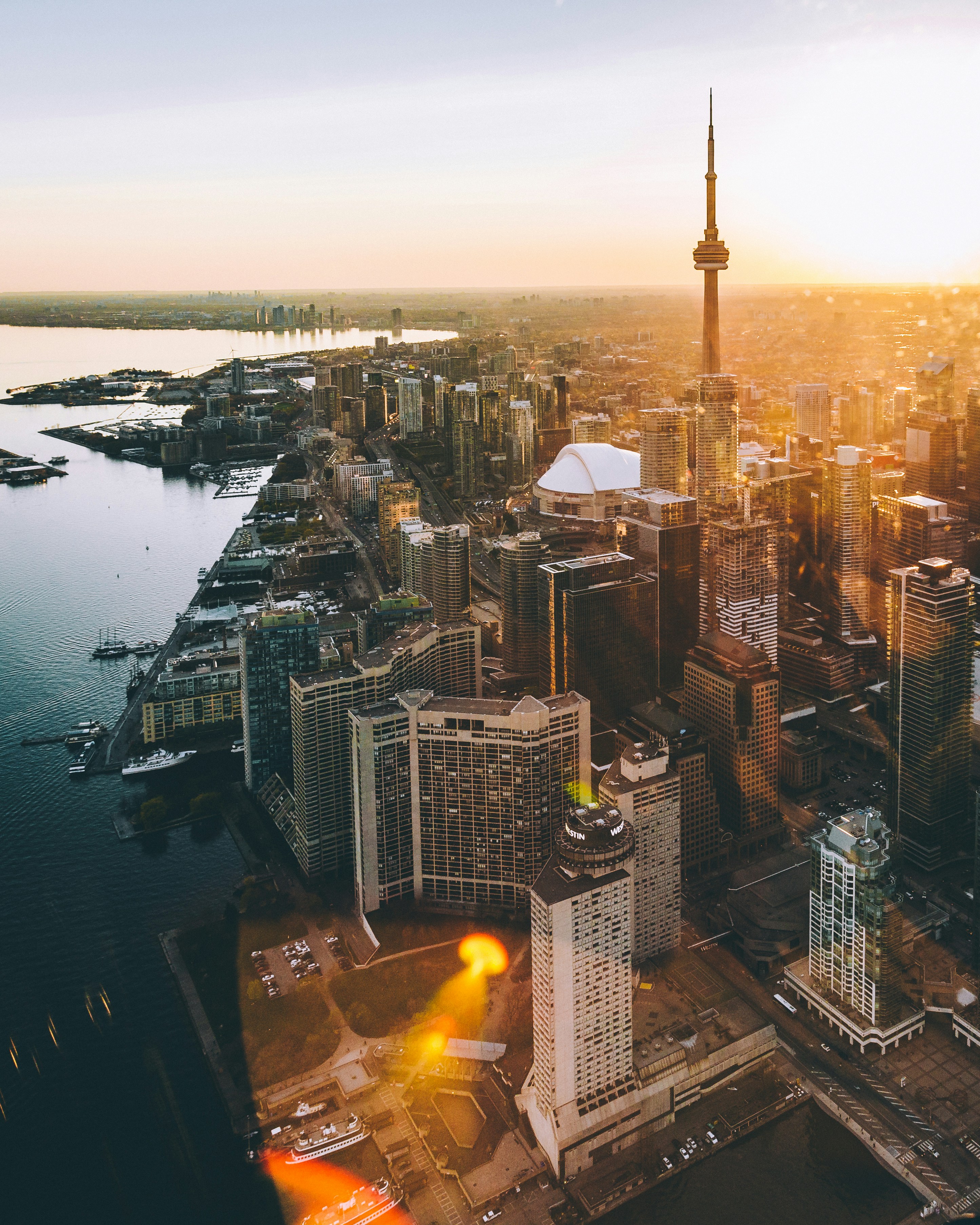
If there is one issue that consistently comes up in conversations with both residents and businesses across Toronto, it is congestion. But what is becoming increasingly clear is that congestion is no longer just a traffic problem—it is an infrastructure problem. As we move toward the October 2026 municipal election, the intersection of gridlock and aging infrastructure is shaping up to be one of the most important and complex policy discussions facing voters.
The City of Toronto has acknowledged this directly in its recent congestion management updates, pointing to the need for better coordination of construction, improved traffic signal timing, and stronger oversight through the Chief Congestion Officer. At the same time, business groups such as the Toronto Region Board of Trade have been vocal in describing congestion as a serious economic constraint, affecting productivity, deliveries, customer access, and the overall competitiveness of the city. For many, the daily reality is simple: it takes longer to get anywhere, and it is getting worse.
What is often less visible—but arguably more important—is the underlying reason why so much of the city is under construction in the first place. Toronto is dealing with decades of underinvestment in core infrastructure. Roads, water systems, transit corridors, and electrical networks are all being repaired, replaced, or upgraded at the same time. The recent commitment of over half a billion dollars to modernize the city’s street lighting system is just one example of how much infrastructure has reached or exceeded its useful life. Both above-ground and below-ground systems are aging, and the cost of catching up is now unavoidable.
The business climate sits directly in the middle of this tension. While the City has taken steps such as increasing the small business property tax subclass discount and acknowledging the pressures facing local operators, many businesses remain concerned about the cumulative impact of congestion, construction disruption, and policy uncertainty. For retailers, restaurants, logistics providers, and service businesses, the issue is not theoretical—it is about lost customers, delayed shipments, rising costs, and reduced competitiveness. The question increasingly being asked is whether Toronto can remain a viable place to operate and grow a business if access and mobility continue to deteriorate during prolonged infrastructure renewal.
This creates a difficult but necessary conversation for the 2026 election. Residents are frustrated with congestion, lane closures, and seemingly endless construction. Businesses are struggling with access, logistics, and unpredictability. Yet at the same time, delaying this work is not a realistic option. The real question for candidates is not whether infrastructure should be rebuilt—but how to do it in a way that minimizes disruption, coordinates projects intelligently, and delivers visible progress.
Politically, this issue cuts across traditional divides. It connects downtown and suburban concerns, commuter and local traffic issues, and short-term frustration with long-term necessity. It also ties directly into broader themes of affordability and fiscal management. If infrastructure renewal continues to drive up costs, how will the city pay for it? And if it is not done efficiently, how much economic activity will be lost in the process?
For voters, this will likely become a litmus test: which candidates have a credible, practical plan to reduce congestion while still addressing the reality of aging infrastructure? It is easy to promise less traffic or fewer disruptions. It is much harder to explain how to rebuild a city without slowing it down.
A note on the mayoral race
As we continue to track the evolving field for mayor, it has come to our attention that earlier assumptions about certain potential candidates should be clarified. Specifically, Ana Bailão, Marco Mendicino, and Josh Matlow should not be considered definitively out of the mayoral race at this time. While there has been speculation and mixed reporting, none should be treated as formally withdrawn without clear, current confirmation.
The mayoral field remains fluid, with Brad Bradford the most prominent declared candidate to date and others still weighing their options. This uncertainty is typical at this stage of the cycle—but it also means the race could shift quickly.
What happens next
One key date to watch is May 1, 2026, when candidates can officially begin filing to run. That will be the first real signal of how crowded the mayoral field will be, and which council races may become competitive across the city.
Between now and then, expect the conversation around congestion, infrastructure, and business competitiveness to intensify. These are not abstract policy debates—they are daily lived experiences for Toronto residents and businesses. And they may ultimately shape not just who runs, but who wins.
Stay tuned.